The 2025 USAYPT Invitational Tournament will be hosted by Rye Country Day School and the Trinity School. It will be held on Feb. 1, 2 on the campus of Rye Country Day School in Rye, New York.
THE PROBLEMS1
1. Sizzler Noise Magnets
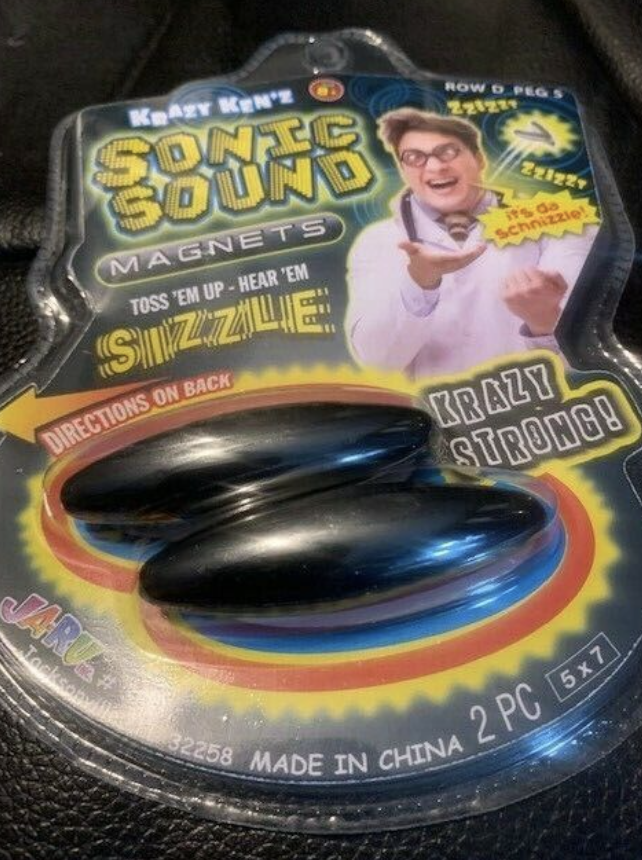
A classic inexpensive toy is the Sonic Sound Sizzler Magnets, also sold as Rattlesnake Eggs, Rattle Magnets, and other labels. Each pack contains one or more pairs of cigar-shaped magnets, which make a sizzling sound when thrown together up in the air. How these magnets work, however, is a physics puzzle. Just playing with them leads to a bunch of questions, such as: What is the magnetic field surrounding each one, when it is in isolation? What are the forces, and torques on one magnet due to the other when they are close together? And of course, why do they sizzle at a particular frequency?
Investigate, both experimentally and theoretically, how these magnets interact.
2. Disc Golf
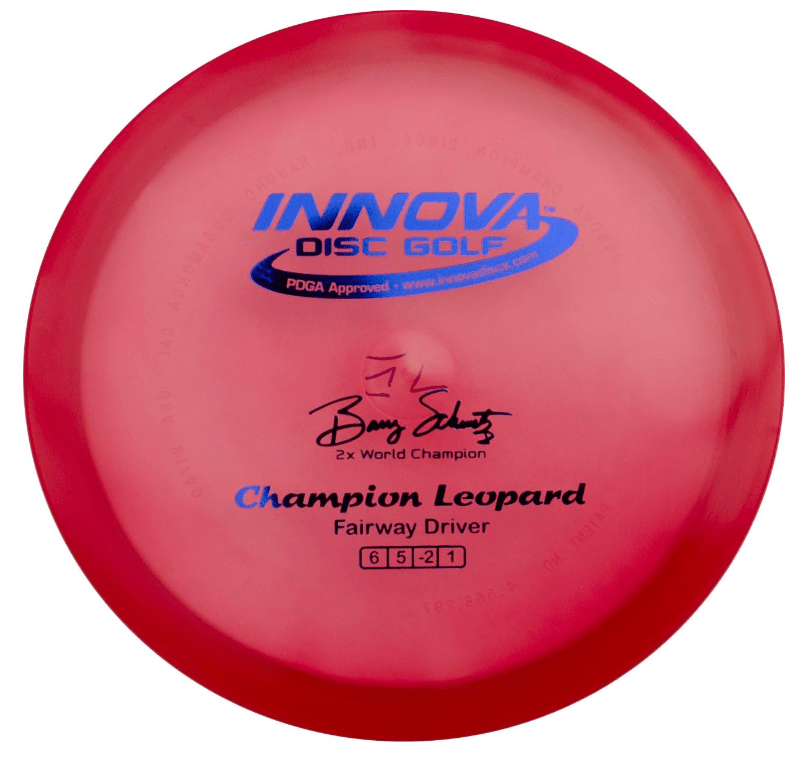
The fast-growing sport of disc golf employs many flying discs, each with quantified flight characteristics. The most common system rates each disc with four numbers called: Speed, Glide, Turn, and Fade, which are usually printed on each disc. Although there must be physics behind each of these numbers, they are measured simply by disc golfers throwing discs and rating them.
Investigate, both experimentally and theoretically, the physics of the flight of golf discs with different flight characteristics. Go into as much depth as you can, but be sure to experimentally test any theory that you present.
3. Building with Jell-OTM
Tall buildings must be strong enough to hold themselves up, yet elastic enough so that they bend, rather than break, in a natural disaster like a hurricane or earthquake. Common buildings materials, such as steel, are both strong and elastic. However, it is difficult to notice the effects of elasticity on toy buildings made of LegoTM bricks, but not if the bricks are made of Jell-OTM.
Use physical experiments with gelatin, and appropriate scaling relations, to model the stability of real skyscrapers. Clearly justify the scaling relations you used to translate the physical conditions in your laboratory to those in the real world.
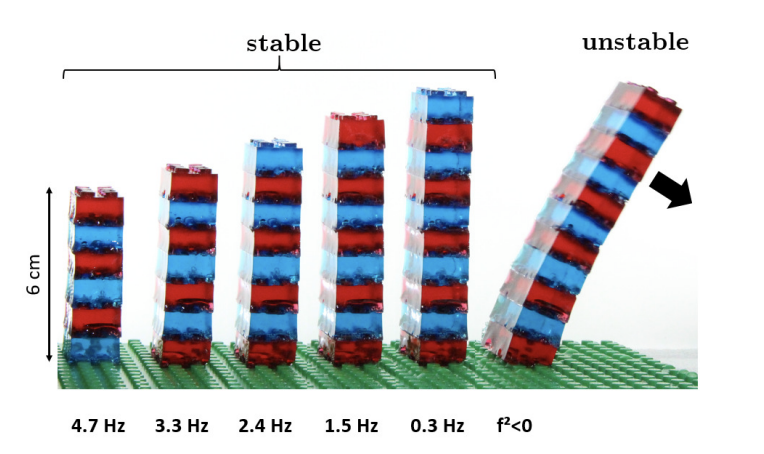
The figure is from: N. Taberlet, et al., “How tall can gelatin towers be? An introduction to elasticity and buckling,” American Journal of Physics 85 (12), p. 908 (2017).
4. A Scintillating Conversation
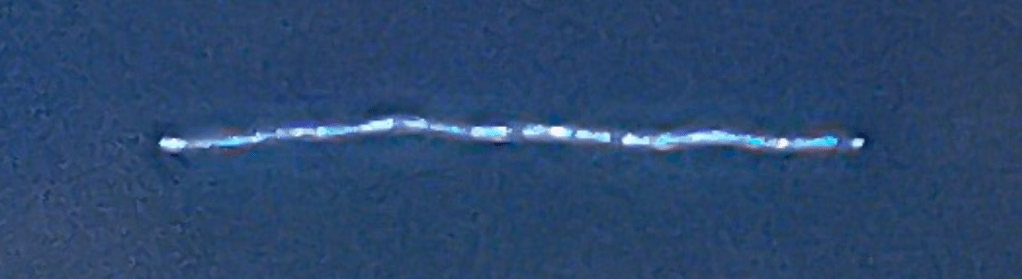
Why do stars twinkle, and planets not so much? How do modern astronomical telescopes “untwinkle” stars to obtain sharper images? These questions relate to the topic of atmospheric scintillation, which makes stars appear to jump around and affects what astronomers call seeing. The scintillation or twinkling of starlight can be studied by sweeping the image of a bright star across the field of view of a camera. Even a cell phone has the sensitivity to detect variations in brightness. Characterize scintillation under various viewing conditions. What causes scintillation? Can you model this phenomenon and predict how scintillation varies with atmospheric conditions? (Photo: Exposure trail of a bright star with iPhone 13.)
- The problems for the 2025 tournament were curated by Dr. Jonathan Keohane of Hampden-Sydney College. Any questions should be directed to Dr. Keohane at jkeohane@hsc.edu . Questions and responses of general interest will be posted on this website. ↩︎
 Physics On the Mark